Lukhovitsy phase 3 | 15 ha
Lukhovitsy phase 3 | 15 ha
A 16.3-hectare production expansion designed for substantial cucumber and tomato output, adding further capacity to the Lukhovitsy greenhouse complex.
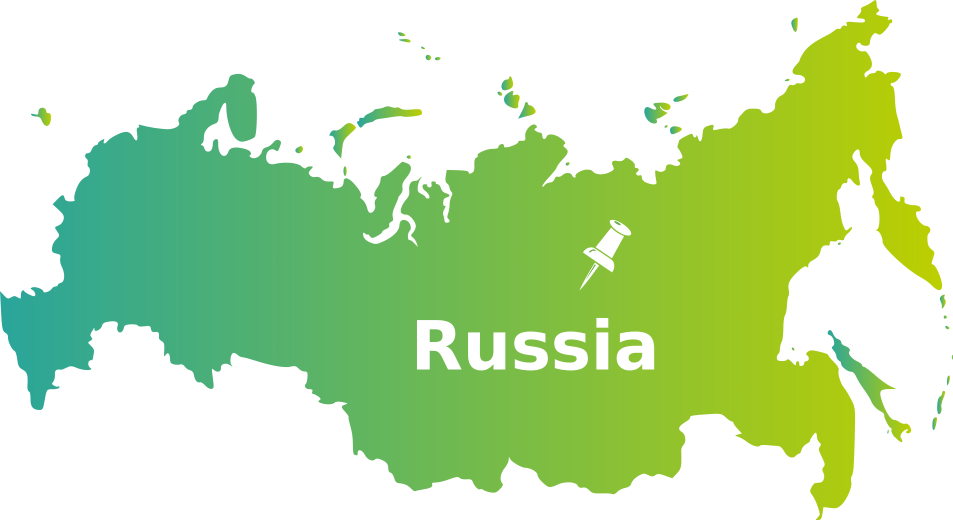
Project Size
Crop
Type
Loaction
Project Year
Current Project Status


Objective and Background
Objective and Background
Objective and Background
The objective of Phase 3 was to complete the next step in scaling the Lukhovitsy production platform. By this stage, the project was no longer about proving the concept; it was about expanding a working model and increasing output.
Technically, Phase 3 had to connect seamlessly to the existing site infrastructure. That means heating, energy, water, climate control, crop logistics, labour movement and packaging flows all had to be absorbed into the existing operation without disturbing the rhythm of the earlier phases.
The ROST page highlights automated systems for maintaining the greenhouse microclimate, automated irrigation and lighting, biological crop protection, bumblebee pollination, an own energy centre and energy-saving LED lighting
The objective of Phase 3 was to complete the next step in scaling the Lukhovitsy production platform. By this stage, the project was no longer about proving the concept; it was about expanding a working model and increasing output.
Technically, Phase 3 had to connect seamlessly to the existing site infrastructure. That means heating, energy, water, climate control, crop logistics, labour movement and packaging flows all had to be absorbed into the existing operation without disturbing the rhythm of the earlier phases.
The ROST page highlights automated systems for maintaining the greenhouse microclimate, automated irrigation and lighting, biological crop protection, bumblebee pollination, an own energy centre and energy-saving LED lighting


Key Challenges
Key Challenges
Key Challenges
The major challenge in Phase 3 was operational expansion without losing control. Adding more hectares means more production, but also more complexity: more climate zones, more crop cycles, more harvest volume, more labour planning and more strain on utilities.
Another challenge was maintaining crop quality and food-safety standards at a larger scale. The site uses biological pest control, pollination with bumblebees, disinfection systems and protective clothing procedures, all of which require disciplined technical and operational execution.
The major challenge in Phase 3 was operational expansion without losing control. Adding more hectares means more production, but also more complexity: more climate zones, more crop cycles, more harvest volume, more labour planning and more strain on utilities.
Another challenge was maintaining crop quality and food-safety standards at a larger scale. The site uses biological pest control, pollination with bumblebees, disinfection systems and protective clothing procedures, all of which require disciplined technical and operational execution.
Scope of Horti XS
Scope of Horti XS
Scope of Horti XS
For a final expansion phase like this, Horti XS’s scope would typically be focused on the technical expansion of the existing platform: greenhouse engineering, system coordination, capacity alignment and integration with the already operational phases.
In practical terms, this means ensuring that the new greenhouse area behaves like a natural extension of the existing complex, same logic, same technical quality, same operational reliability.
For a final expansion phase like this, Horti XS’s scope would typically be focused on the technical expansion of the existing platform: greenhouse engineering, system coordination, capacity alignment and integration with the already operational phases.
In practical terms, this means ensuring that the new greenhouse area behaves like a natural extension of the existing complex, same logic, same technical quality, same operational reliability.


Result and Value Delivered
Result and Value Delivered
Result and Value Delivered
Lukhovitsy developed from an initial greenhouse block into a multi-phase high-tech vegetable complex. Across the three phases, the project evolved from production base, to scaled greenhouse operation, to integrated fresh-produce platform.
The value of the project lies in the combination of:
controlled year-round production.
automated climate, irrigation and lighting systems.
biological crop protection.
own energy infrastructure.
LED lighting.
direct connection to sorting, packaging and distribution.
proximity to the Moscow consumer market
Lukhovitsy developed from an initial greenhouse block into a multi-phase high-tech vegetable complex. Across the three phases, the project evolved from production base, to scaled greenhouse operation, to integrated fresh-produce platform.
The value of the project lies in the combination of:
controlled year-round production.
automated climate, irrigation and lighting systems.
biological crop protection.
own energy infrastructure.
LED lighting.
direct connection to sorting, packaging and distribution.
proximity to the Moscow consumer market
31.1-hectare tomato production complex incorporating advanced climate, lighting, irrigation recycling, and biological crop protection technologies.
A major 30.8-hectare expansion of the Lukhovitsy complex, complemented by a 19,000 m² distribution centre for large-scale fresh produce operations.

